
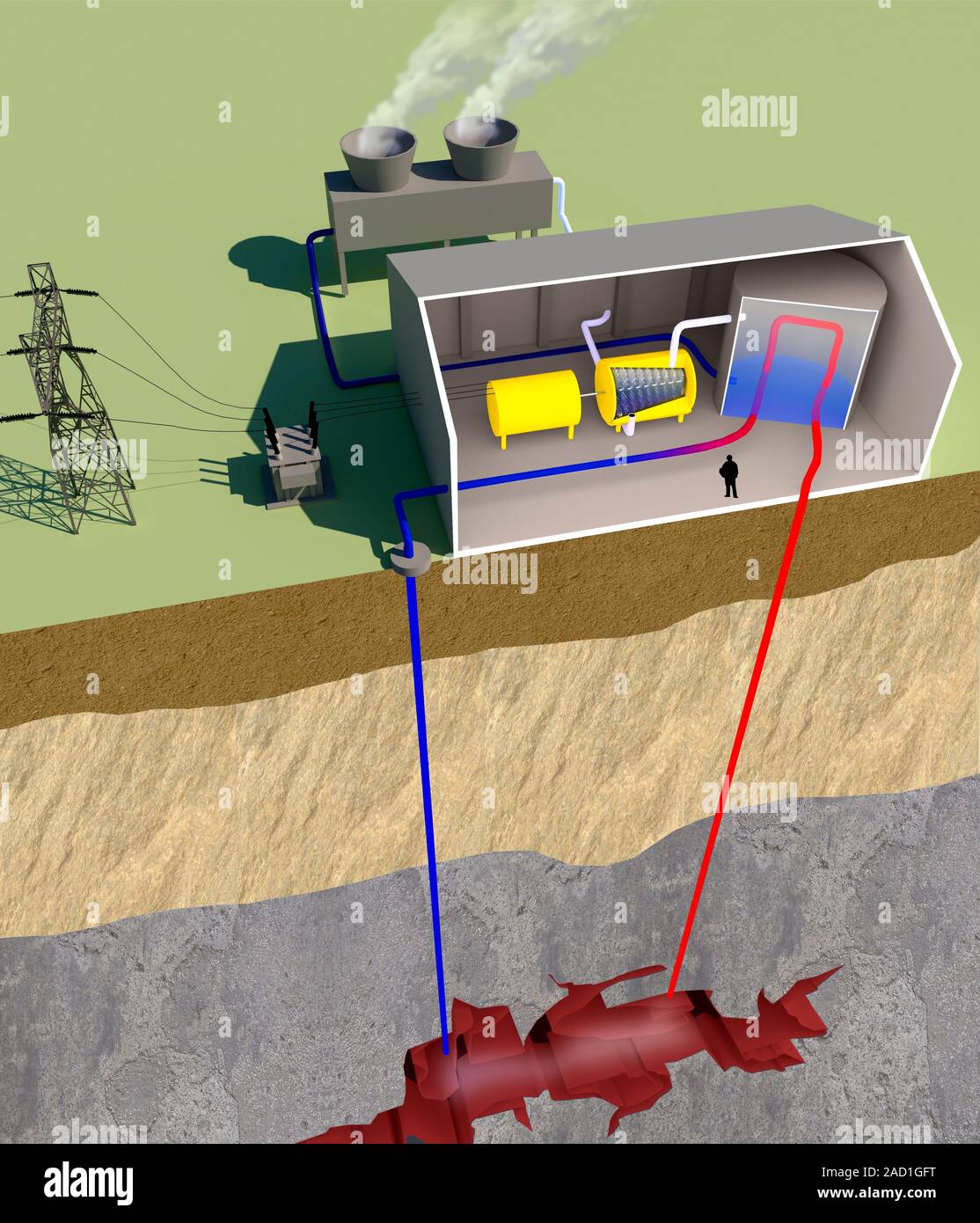
Exploring the Source of Geothermal Energy Deep Underground
Geothermal energy, a potent and relatively untapped renewable resource, offers a compelling alternative to fossil fuels. Harnessing the Earth's internal heat, this sustainable energy system holds immense potential for heating, cooling, and electricity generation. But what exactly is geothermal energy, and how can we unlock its power for a cleaner future? This comprehensive guide delves into the depths of geothermal technology, its benefits, drawbacks, applications, and future prospects.
What is Geothermal Energy and How Does it Work?
At its core, geothermal energy is simply heat derived from the Earth's interior. This heat originates from the planet's formation and radioactive decay in the core. The temperature gradient between the Earth's core and its surface creates a continuous flow of heat outwards. In some areas, this heat manifests as volcanic activity, hot springs, and geysers. However, most of the Earth's geothermal energy remains trapped deep underground in permeable rocks and reservoirs of hot water.
Harnessing this underground energy involves several methods, broadly categorized as: Geothermal Power Plants: These plants tap into high-temperature geothermal reservoirs (typically above 300°F or 150°C) close to the surface. Hot steam or water is extracted from these reservoirs and used to spin turbines connected to generators, producing geothermal electricity. There are three main types of geothermal power plants: Dry Steam Plants: The oldest type, these plants directly use the steam from geothermal reservoirs to turn turbines.
Flash Steam Plants: These plants take high-pressure hot water and flash it into steam by reducing the pressure. The steam is then used to power turbines.
Binary Cycle Plants: These plants use moderately hot geothermal water (between 225°F and 360°F, or 107°C and 182°C) to heat a secondary fluid with a lower boiling point. The vaporized secondary fluid then drives the turbines. Binary cycle plants are particularly useful for geothermal resources that are not hot enough for flash steam plants.
Geothermal Heat Pumps (GHPs): Unlike geothermal power plants that generate electricity, GHPs directly utilize the relatively constant temperature of the shallow ground (around 50-60°F or 10-16°C) for heating and cooling buildings. A GHP system consists of an underground loop of pipes filled with a water and antifreeze solution. This solution absorbs heat from the ground in the winter, which is then transferred to the building. In the summer, the process is reversed, and heat is extracted from the building and transferred to the cooler ground. GHPs are also known as ground source heat pumps.
Direct Use Applications: This category encompasses a variety of applications where geothermal heat is directly utilized without electricity generation. Examples include: District Heating: Geothermal hot water is piped directly to homes and buildings for space heating and hot water supply.
Greenhouse Heating: Geothermal heat can be used to maintain optimal growing temperatures in greenhouses, extending growing seasons and increasing yields.
Aquaculture: Geothermal energy can be used to heat water for fish farming, promoting faster growth and improving production.
Industrial Processes: Several industries, such as food processing and paper production, utilize geothermal heat for various processes.
Geothermal Power vs. Fossil Fuels: A Comparison
The allure of geothermal power lies in its numerous advantages compared to traditional fossil fuels: Renewability: Geothermal energy is a renewable resource because the Earth's heat is constantly replenished. Unlike fossil fuels, which are finite and depleting, geothermal resources are essentially inexhaustible. Low Emissions: Geothermal power plants emit significantly less greenhouse gases than fossil fuel-fired power plants. While some emissions are associated with geothermal development (e.g., carbon dioxide and hydrogen sulfide), they are typically a fraction of those from fossil fuels. This makes geothermal energy a vital component of a transition to green electricity. Reliability: Geothermal power plants can operate 24 hours a day, 7 days a week, regardless of weather conditions. This inherent reliability contrasts sharply with intermittent renewable sources like solar and wind, making it an excellent baseload power option. Small Footprint: While geothermal power plants require land for development, their overall footprint is relatively small compared to fossil fuel extraction and transportation infrastructure. Energy Independence:Developing geothermal resources can reduce a country's reliance on imported fossil fuels, enhancing energy security and national independence.
Disadvantages and Limitations of Geothermal Energy
Despite its many benefits, geothermal energy also faces certain limitations: Location Specificity: Geothermal resources are not uniformly distributed across the globe. High-temperature geothermal reservoirs suitable for power generation are typically found in volcanically active regions or areas with favorable geological conditions. High Upfront Costs: The initial investment required to build geothermal power plants can be substantial. This includes costs associated with exploration, drilling, and plant construction. Environmental Impacts: While geothermal energy is generally considered environmentally friendly, it can have some localized environmental impacts. These include: Land Use: Geothermal development can disrupt ecosystems and require land clearing.
Induced Seismicity: In some cases, geothermal operations can trigger minor earthquakes, particularly when injecting fluids back into the ground.
Subsidence: Extraction of large volumes of geothermal fluids can lead to land subsidence in certain areas.
Air Emissions: While low, geothermal power plants can release small amounts of greenhouse gases and other pollutants. Resource Depletion: Over-extraction of geothermal fluids can deplete geothermal reservoirs, reducing their productivity over time. Careful reservoir management is crucial to ensure the long-term sustainability of geothermal resources.
Real-World Applications of Geothermal Energy
Geothermal energy is already being utilized in various applications around the world: Residential Heating and Cooling: Geothermal heat pumps are gaining popularity as a sustainable and energy-efficient way to heat and cool homes. They offer significant cost savings compared to traditional HVAC systems and reduce carbon emissions. Commercial Buildings: Geothermal heating and cooling systems are also being installed in commercial buildings, such as schools, hospitals, and office buildings. These systems can significantly reduce energy costs and improve indoor air quality. Power Generation: Geothermal power plants are generating electricity in numerous countries, including the United States, Iceland, the Philippines, Indonesia, and New Zealand. These plants provide a reliable and clean source of power, contributing to a more sustainable energy mix. Industrial Applications: Geothermal heat is used in a variety of industrial processes, such as food processing, paper production, and chemical manufacturing. This reduces reliance on fossil fuels and lowers production costs. Agricultural Applications:Geothermal energy is used to heat greenhouses, aquaculture farms, and soil, improving crop yields and extending growing seasons.
Cost Breakdown: Setup vs. Long-Term Savings
The initial investment for geothermal systems can seem daunting, but it's crucial to consider the long-term savings.
Geothermal Power Plant: These plants carry significant upfront costs, ranging from millions to billions of dollars depending on the size and complexity. However, the operational costs are relatively low because the fuel (Earth's heat) is free. Over the plant's lifespan (typically 30+ years), the levelized cost of electricity (LCOE) can be competitive with or even lower than fossil fuel-based power generation, especially when considering carbon pricing and environmental regulations.
Geothermal Heat Pump: The installation cost for a GHP system typically ranges from \$15,000 to \$30,000, depending on the size of the home and the complexity of the installation. This is higher than the cost of conventional HVAC systems. However, GHPs offer significant long-term savings on energy bills, typically 30-60% lower than traditional heating and cooling systems. The payback period for a GHP system is typically 5-10 years, after which the system provides significant cost savings. Government incentives and rebates can further reduce the upfront costs.
Environmental Impact: Positive and Negative Aspects
Geothermal energy is generally considered an eco-friendly energy source, but it is not without its environmental impacts.
Positive Impacts
Low Greenhouse Gas Emissions: Geothermal power plants emit significantly less greenhouse gases than fossil fuel-fired power plants. Reduced Air Pollution: Geothermal energy does not produce smog-forming pollutants like nitrogen oxides (NOx) and sulfur dioxide (SO2). Renewable Resource: Geothermal energy is a renewable resource that is constantly replenished by the Earth's internal heat. Small Footprint: Geothermal power plants have a relatively small footprint compared to fossil fuel extraction and transportation infrastructure.
Negative Impacts
Land Use: Geothermal development can disrupt ecosystems and require land clearing. Induced Seismicity: In some cases, geothermal operations can trigger minor earthquakes. Subsidence: Extraction of large volumes of geothermal fluids can lead to land subsidence. Air Emissions: Geothermal power plants can release small amounts of greenhouse gases and other pollutants, such as hydrogen sulfide (H2S).
Countries Leading in Geothermal Energy Adoption
Several countries have embraced geothermal energy as a significant part of their energy mix: Iceland: Iceland is a world leader in geothermal energy adoption, with nearly 100% of its electricity and heat coming from renewable sources, including geothermal. Its abundant geothermal resources and supportive government policies have made it a pioneer in sustainable energy. United States: The United States is the world's largest producer of geothermal electricity, with significant geothermal resources in the western states. California is the leading state for geothermal power generation. Philippines: The Philippines is the second-largest producer of geothermal electricity in the world, with abundant geothermal resources due to its location on the Pacific Ring of Fire. Indonesia: Indonesia has vast geothermal resources and is rapidly expanding its geothermal power capacity to meet its growing energy demand. New Zealand: New Zealand has a long history of geothermal energy utilization, with geothermal power plants providing a significant portion of its electricity. Kenya: Kenya is a leader in geothermal energy development in Africa, with plans to significantly increase its geothermal power capacity.
These countries are leveraging their unique geothermal resources and innovative technologies to achieve energy independence, reduce carbon emissions, and promote sustainable development.
Future Trends and Innovations in Geothermal Technology
The future of geothermal energy looks promising, with ongoing research and development efforts focused on improving efficiency, reducing costs, and expanding its applicability. Some key trends and innovations include: Enhanced Geothermal Systems (EGS): EGS technology aims to access geothermal resources in areas where the rock is hot but lacks sufficient permeability or water. This involves fracturing the rock to create pathways for water to flow and extract heat. EGS could significantly expand the availability of geothermal resources worldwide. Advanced Drilling Technologies: New drilling technologies, such as closed-loop systems and advanced drilling materials, are being developed to reduce drilling costs and increase access to deeper and hotter geothermal resources. Supercritical Geothermal Systems: Supercritical geothermal systems tap into extremely hot and high-pressure geothermal fluids, which can generate significantly more electricity than conventional geothermal systems. Geothermal Energy Storage: Developing effective ways to store geothermal energy, such as through thermal energy storage systems, can help to match supply with demand and improve the reliability of geothermal power. Hybrid Geothermal Systems:Combining geothermal energy with other renewable energy sources, such as solar and wind, can create more reliable and resilient energy systems.
Practical FAQs About Geothermal Energy
Q: How much does a geothermal heat pump cost to install?
A: Installation costs typically range from \$15,000 to \$30,000, depending on the size of the home and the complexity of the installation.
Q: How long does it take to see a return on investment for a geothermal system?
A: The payback period is typically 5-10 years, after which the system provides significant cost savings.
Q: Is geothermal energy safe?
A: Geothermal energy is generally considered safe, but there are some potential environmental impacts, such as induced seismicity and land subsidence, that need to be carefully managed.
Q: How efficient are geothermal heat pumps?
A: Geothermal heat pumps are highly efficient, with coefficient of performance (COP) values ranging from 3 to 5. This means that they can deliver 3 to 5 units of heating or cooling for every unit of electricity consumed.
Q: Are geothermal resources available everywhere?
A: While some form of geothermal heat is available everywhere, high-temperature geothermal resources suitable for power generation are typically found in volcanically active regions or areas with favorable geological conditions. However, geothermal heat pumps can be used in a much wider range of locations, as they utilize the relatively constant temperature of the shallow ground.
Conclusion
Geothermal energy offers a compelling pathway towards a sustainable energy future. While challenges remain, ongoing technological advancements and supportive policies are paving the way for wider adoption of this clean, reliable, and renewable energy source. From powering cities to heating homes, the potential of underground energy sources to transform our energy landscape is undeniable. As we strive for a cleaner and more sustainable world, geothermal energy will undoubtedly play an increasingly important role.