
Geothermal Energy: Renewable or Nonrenewable Resource?
Geothermal energy, the Earth's internal heat, presents a compelling alternative to traditional fossil fuels. But is it truly a renewable resource, or does its utilization eventually deplete the underground energy source? The answer, as with many complex environmental questions, lies in understanding how geothermal energy is harnessed and managed.
In this comprehensive guide, we'll delve into the intricacies of geothermal power, explore its advantages and disadvantages, examine its diverse applications, and address the vital question of its sustainability. Whether you're an environmental enthusiast, a homeowner considering geothermal heating, or simply curious about alternative energy, this resource will provide you with a clear and informed perspective.
Understanding Geothermal Energy: Tapping into the Earth's Core
At its core, geothermal energy is the heat emanating from the Earth's interior. This heat is a remnant from the planet's formation and is constantly replenished by radioactive decay within the Earth's core. This immense reservoir of heat warms underground reservoirs of water, creating steam and hot water that can be harnessed for various applications.
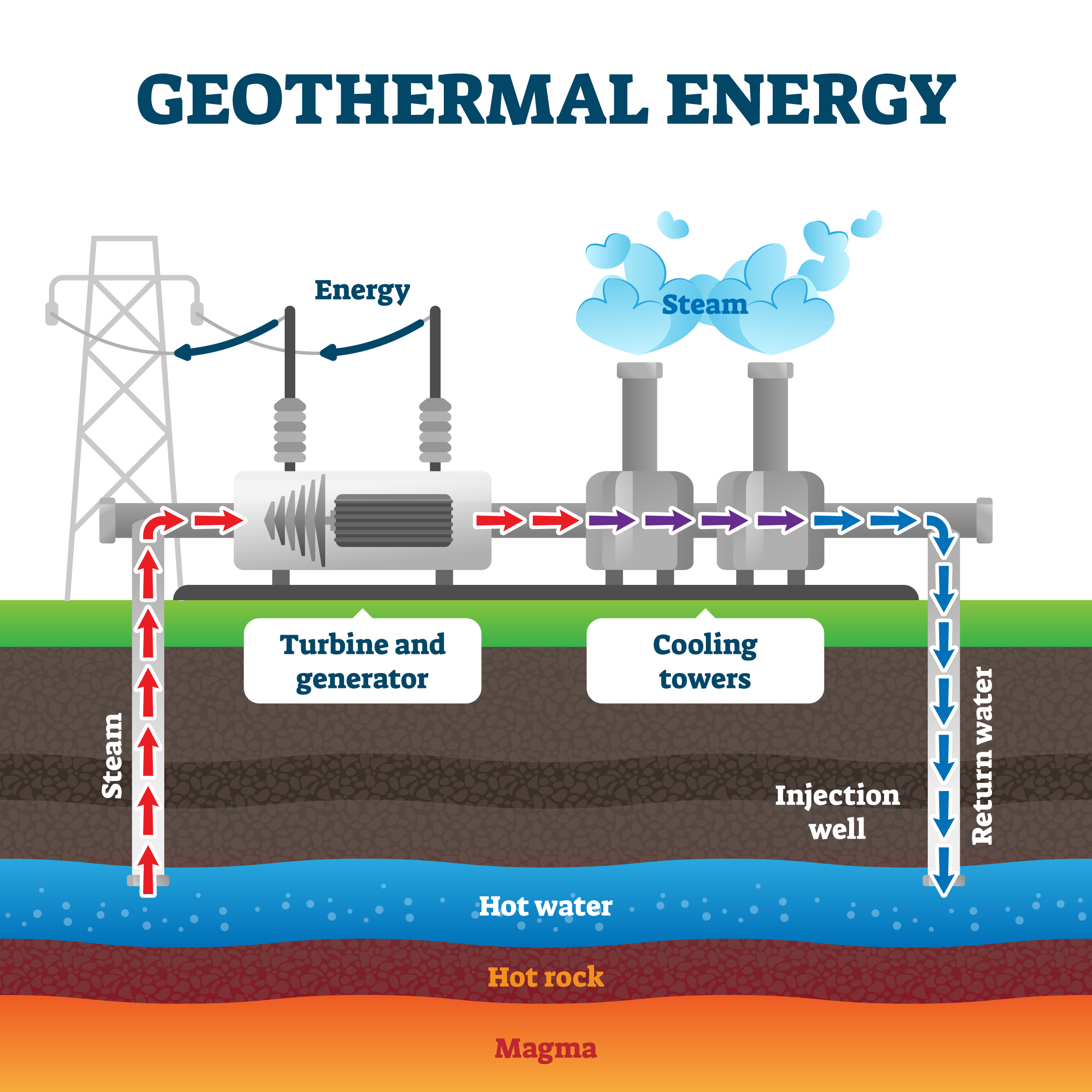
There are several ways to access this underground energy source: Geothermal Power Plants:These facilities tap into high-temperature geothermal reservoirs (typically exceeding 300°F) to generate electricity. Steam from the reservoir directly spins turbines connected to generators, producing green electricity. Alternatively, in flash steam plants, high-pressure hot water is converted into steam, which then drives the turbines. Binary cycle power plants use a secondary fluid with a lower boiling point than water. Hot water from the reservoir heats this fluid, which then vaporizes and drives the turbine. This method allows for the utilization of lower-temperature geothermal resources.
Geothermal Heating and Cooling (Geothermal Heat Pumps): These systems utilize the relatively constant temperature of the Earth a few feet below the surface. During the winter, the ground is warmer than the air, so the heat pump extracts heat from the earth and transfers it indoors. In the summer, the process is reversed, with the heat pump drawing heat from the building and transferring it into the cooler ground. This offers a highly efficient method for heating and cooling homes and buildings. These systems don't directly use steam from underground reservoirs but rather leverage the Earth's consistent temperature.
Direct Use Applications: Geothermal energy can also be used directly for various applications, such as heating greenhouses, aquaculture farms, and district heating systems. In these cases, hot water from geothermal reservoirs is piped directly to the point of use. Some locations even utilize geothermal resources for bathing and therapeutic spas, a practice with a rich history.
The Renewable Advantage: A Greener Energy Solution
Compared to fossil fuels, geothermal power offers significant environmental benefits: Lower Greenhouse Gas Emissions: Geothermal power plants emit significantly less greenhouse gases than coal or natural gas-fired power plants. In fact, some geothermal plants can operate with virtually zero emissions. The exact emissions depend on the specific technology and the characteristics of the geothermal reservoir. Reduced Air Pollution: Unlike fossil fuels, geothermal energy does not produce harmful air pollutants like nitrogen oxides, sulfur dioxide, and particulate matter, which can contribute to respiratory problems and other health issues. Sustainable Power Source: As long as geothermal reservoirs are managed sustainably, the heat source is continuously replenished by the Earth's natural processes. This makes geothermal a truly renewable resource, unlike fossil fuels, which are finite. Smaller Footprint: Geothermal power plants typically require less land than coal mines or oil wells. Additionally, geothermal heat pump systems are largely invisible, with most of the equipment located underground.
The Flip Side: Limitations and Challenges
While geothermal energy boasts many advantages, it's essential to acknowledge its limitations: Location Specificity: Geothermal resources are not evenly distributed around the globe. The most significant resources are typically found near volcanically active areas or regions with high heat flow. This limits the widespread adoption of geothermal power plants. High Upfront Costs: The initial investment for building a geothermal power plant or installing a geothermal heat pump system can be substantial. Drilling wells and constructing the necessary infrastructure requires significant capital. However, these high upfront costs are often offset by lower operating costs over the lifespan of the system. Potential for Induced Seismicity: In some cases, injecting water into geothermal reservoirs can trigger small earthquakes. This is a concern that requires careful monitoring and management. Advanced technologies and best practices are being developed to minimize the risk of induced seismicity. Resource Depletion (If Unsustainably Managed): While geothermal energy is renewable, reservoirs can be depleted if hot water is extracted at a rate faster than it is replenished. Sustainable management practices, such as reinjecting water back into the reservoir, are crucial to ensure the long-term viability of geothermal power. Land Use Impacts:Although geothermal plants generally have a smaller footprint than fossil fuel facilities, they can still have some land use impacts, particularly in areas with sensitive ecosystems.
Geothermal in Action: Real-World Applications
Geothermal energy is already being utilized in numerous countries around the world: Iceland: A global leader in geothermal energy, Iceland generates a significant portion of its electricity and heat from geothermal resources. The country's abundant geothermal resources have allowed it to become a pioneer in sustainable energy solutions. United States: The United States has the largest installed geothermal capacity in the world, with power plants primarily located in California, Nevada, and Utah. Geothermal heat pumps are also gaining popularity for residential and commercial heating and cooling. Philippines: This archipelago nation relies heavily on geothermal energy for electricity generation. The Philippines' location in the Pacific Ring of Fire makes it a prime location for geothermal resources. Kenya: Kenya has made significant strides in developing its geothermal resources, with several power plants contributing to the country's energy mix. Italy:Italy was one of the first countries to develop geothermal power, with the Larderello geothermal field in Tuscany being a historical site of geothermal innovation.
Beyond electricity generation, geothermal energy is used for: District Heating: Providing heat to entire neighborhoods or cities. Agricultural Applications: Heating greenhouses and aquaculture farms. Industrial Processes: Providing heat for various industrial processes. Tourism and Recreation: Heating swimming pools and spas.
The Cost Factor: Initial Investment vs. Long-Term Savings
The cost of geothermal energy varies depending on the specific application and location. Geothermal power plants require substantial upfront investment for drilling, construction, and equipment. However, once operational, geothermal plants have relatively low operating costs because they don't require fuel.
Geothermal heat pump systems also have higher initial installation costs compared to conventional heating and cooling systems. However, they offer significant long-term savings due to their high energy efficiency. The payback period for a geothermal heat pump system can vary depending on factors such as local energy prices and climate conditions.
Sustainability and the Future of Geothermal Energy
The long-term sustainability of geothermal energy depends on responsible management practices. Reinjecting water back into geothermal reservoirs is crucial to maintain pressure and prevent depletion. Monitoring and mitigating the risk of induced seismicity is also essential.
Technological advancements are paving the way for more efficient and sustainable geothermal energy utilization. Enhanced Geothermal Systems (EGS) are being developed to access geothermal resources in areas without naturally occurring hydrothermal reservoirs. EGS involves creating artificial fractures in hot, dry rock formations to allow water to circulate and extract heat.
Other innovations include: Advanced Drilling Techniques: Allowing for deeper and more efficient well drilling. Improved Reservoir Management: Optimizing the utilization of geothermal resources. Hybrid Geothermal Systems:Combining geothermal energy with other renewable energy sources, such as solar and wind.
Geothermal Energy: Renewable or Nonrenewable? The Verdict
Geothermal energy is, by definition, a renewable energy source because the Earth's internal heat is continuously replenished. However, the sustainability of geothermal power depends on responsible management practices. Over-extraction of geothermal resources without reinjection can lead to depletion. Therefore, proper management and advanced technologies are crucial to ensure the long-term viability of geothermal as a sustainable power source.
By embracing innovative technologies and implementing responsible management strategies, we can unlock the full potential of geothermal energy and contribute to a cleaner, more sustainable energy future.
FAQs about Geothermal Energy How much does it cost to install a geothermal heat pump?The cost varies based on the size of your home and local factors, but typically ranges from $20,000 to $40,000. However, government incentives and long-term energy savings can offset the initial investment.
Is geothermal energy safe?Geothermal power is generally safe, but there is a potential risk of induced seismicity in some areas. Proper monitoring and management can minimize this risk. Geothermal heat pumps are very safe for residential use.
How efficient is geothermal energy? Geothermal heat pumps are highly efficient, often exceeding 300% efficiency. This means that for every unit of electricity used to operate the system, more than three units of heat are delivered.
Where can I find geothermal energy? While geothermal resources are not evenly distributed, they can be found in many regions around the world, particularly near volcanically active areas. Geothermal heat pump systems can be installed virtually anywhere, as they utilize the consistent temperature of the Earth near the surface.
What are the environmental benefits of geothermal energy compared to fossil fuels? Geothermal energy produces significantly lower greenhouse gas emissions and air pollution compared to fossil fuels. It is also a renewable resource, unlike fossil fuels, which are finite.